Why We Are Doubling Down on 1KOMMA5°
Why We Are Doubling Down on 1KOMMA5°
The news is out: We are proudly leading 1KOMMA5°’s latest EUR 70m financing round, joined by new investors Marunouchi Innovation Partners (MIP) and existing investors such as G2 Venture Partners, eCapital, Eurazeo and CalSTRS.
b2venture has always taken risks when backing non-obvious emerging champions. Be it the team behind DeepL in 2009, quantum companies around a decade ago, or nuclear fusion and rocket companies long before these were “hot” categories. Leading a round at this stage, however, is an unusually bold step for us. Europe needs more electricity and has limited options it can deploy quickly. Our conviction rests on a clear lead: the company combines the ability to deploy at scale with Heartbeat, its full-stack energy AI, and commercial traction that demonstrates the model. It can unlock affordable flexibility from distributed assets already in place, just as rising electricity demand and Germany’s planned 2027 market reform make that capability essential. This is the opportunity we are doubling down on.
The problem: Rising electricity demand and prices meet limited near-term options
We are in the early innings of a new energy supercycle. The electrification of mobility, heat and industrial processes is picking up speed, while data centres and AI infrastructure add to electricity demand. The IEA forecasts average annual growth of 2.3% in EU electricity demand between 2026 and 2030. Europe needs to meet that demand while lowering energy costs and reducing strategic dependencies. Yet grid expansion takes years, more imported fossil fuels reinforce those dependencies, and emerging technologies cannot solve the immediate problem. Making better use of assets already deployed is therefore a strategic priority.
Europe’s dependence on imported fuels leaves it exposed to decisions and disruptions beyond its control. Net imports covered 57% of the EU’s energy needs in 2024. Russia’s weaponization of energy and the vulnerability of maritime supply routes such as the Strait of Hormuz and the Bab al-Mandab Strait in the Red Sea show why energy security cannot rest on an assumption of uninterrupted imports. As we discussed at b2venture’s roundtable on European energy sovereignty, the physical resilience of critical infrastructure also deserves far more attention. The concern that our Partner Gerrit Jurilj first shared in our November 2025 b2venture Newsletter, is that attacks on energy assets will become a more important part of the threat Europe faces. Distributed generation can reduce the impact of losing individual assets.
Europe already has a substantial part of the answer. Renewables accounted for 58.6% of electricity generated domestically and fed into Germany’s grid in 2025. The challenge is that wind and solar produce on the weather’s schedule, while consumers follow their own. Making flexible demand follow available supply changes the economics: charging vehicles, heating homes and filling batteries when renewable electricity is abundant allows us to use more low-cost generation and reduce expensive peaks. Orchestrated renewables are an obvious, existing solution to a substantial part of Europe’s near-term challenge. The generation, storage and flexible loads are already there; Heartbeat provides the intelligence to make them work together at scale.
The ability to deploy
Energy is a physical business. Turning a household into an active participant in the electricity market means selling, installing, connecting and servicing equipment, then making it work reliably over years. 1KOMMA5° has built that capability: the company reports more than 80 locations across seven markets and over 300,000 installed energy systems.
That network gives Heartbeat a direct route into customers’ homes. The group can bring hardware, installation, metering and software together in one customer relationship, with operational feedback flowing back into product development. This is a substantial advantage over a software company that must first persuade independent manufacturers, utilities and installers to adopt and distribute its product. Those relationships take time to build, and each introduces another implementation timetable.
1KOMMA5° can deploy through its own operations while opening Heartbeat to third parties and, more recently, to non-installation customers. Its installation network supports the platform’s growth; partnerships extend its reach into the much larger installed base.
Heartbeat: The universal full-stack energy AI built for the next market
Heartbeat is the centre of our investment thesis. We see it as the leading full-stack energy AI for residential energy management and direct marketing: a platform that connects physical devices, makes operating decisions and turns those decisions into transactions in the electricity market.
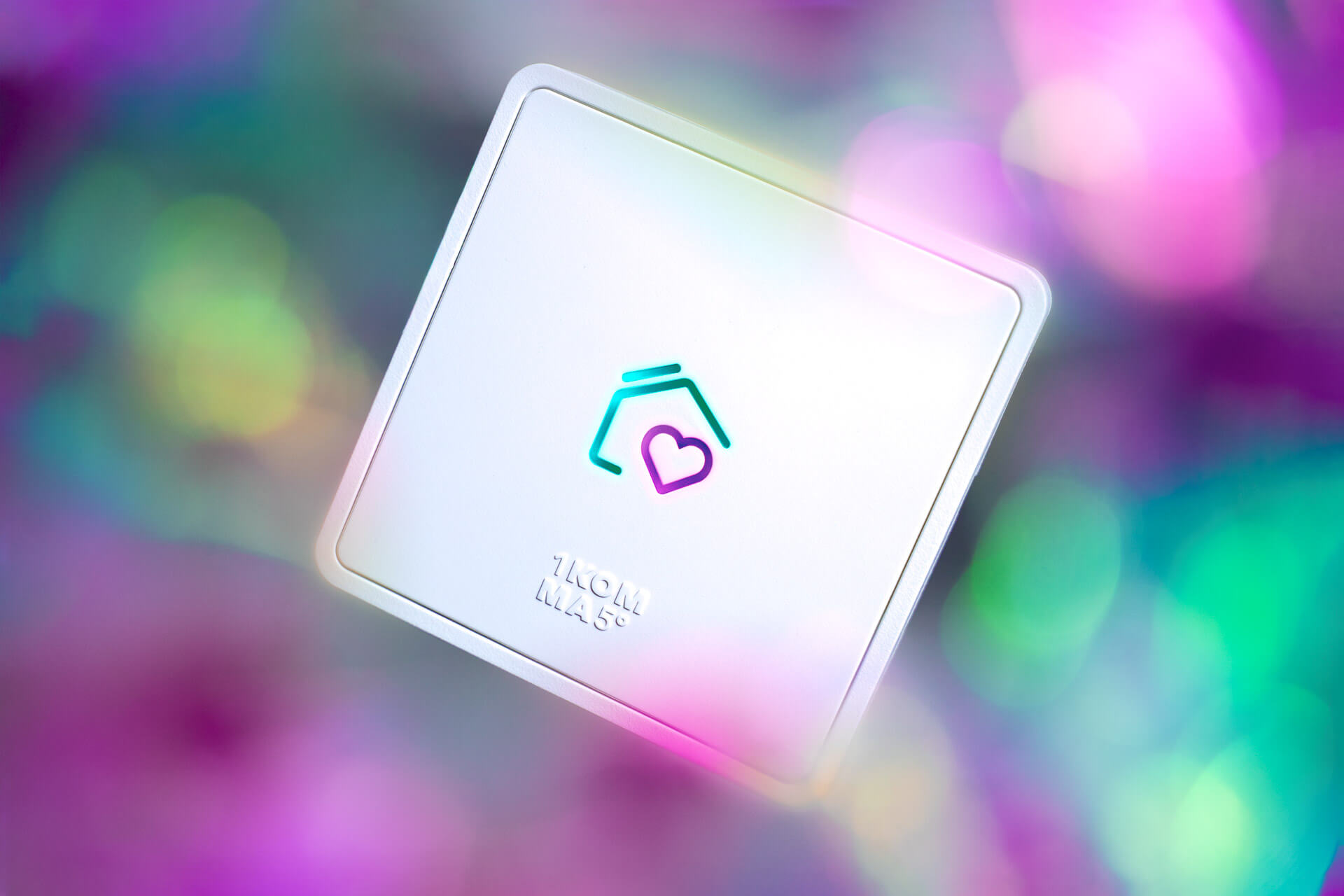
The stack runs from the Heartbeat gateway and integrations with solar systems, batteries, heat pumps and EV chargers through forecasting and automated control to smart-meter services, dynamic tariffs, direct marketing and the associated energy-market processes. Heartbeat decides when to charge a battery, when to run flexible loads and when to sell electricity. The value comes from coordinating these decisions across the household and the wider virtual power plant.
The breadth of that stack matters. Index Ventures-backed Nomos, for example, claims to cover electricity supply, procurement, balancing and billing under partners’ brands; partners connect their own home-energy management systems. It addresses a narrower part of the chain that 1KOMMA5° combines with deployment and device-level optimisation. A customer needs that complete chain to work. Building and operating it at scale is the hard part, and it is where we see Heartbeat’s massive lead.
January 2027 is a critical catalyst. Germany’s proposed EEG 2027 reform is intended to begin a phased shift for new installations from fixed feed-in remuneration towards direct marketing. Existing installations retain their promised support, and the legislation is still being finalised. For the new market, however, the economic direction is fundamental: the timing and management of a household’s electricity flows become increasingly important to the return on its equipment.
A fixed feed-in tariff has historically insulated small producers from much of that complexity. Under a more market-driven model, households need someone to manage prices, forecasts, storage, consumption and sales for them. That makes integrated energy intelligence central to the customer proposition. Heartbeat already brings these capabilities together.
This opportunity extends well beyond 1KOMMA5°’s own customers. Utilities, manufacturers and installers face the same transition and need the same operating capabilities. Heartbeat’s opening to these partners in April 2026 positions it to become infrastructure for the industry. The reform is likely to make a lasting impact on the B2C renewables market and accelerate demand for a platform 1KOMMA5° has already spent years building and deploying.
Traction that demonstrates the model
Heartbeat now reports more than 100,000 connected energy systems across five markets, around 1 GW of networked capacity and a team of 250 engineers and developers. The company reached the gigawatt milestone in May 2026, doubling its shiftable capacity within a year. These figures show the scale of the operational platform behind the thesis.
The commercial development is equally relevant. In its September update, 1KOMMA5° reported 30% organic revenue growth for the first nine months and an annualised revenue run rate of approximately EUR 30m for its AI business. It reiterated a 2026 revenue target of roughly USD 750m and expected hardware-segment EBITDA of around EUR 40m . The hardware business supplies deployment capability and earnings while the software business builds recurring customer relationships around the installed assets.
This round finances the next stage and allows the company to invest more than EUR 100m in Heartbeat in 2027. That capital goes behind a platform with operating scale, a substantial customer base and a market transition directly aligned with its capabilities.
Unlocking capacity from assets that already exist
The most compelling part of this model is where the flexibility comes from: solar panels on roofs, batteries in homes, heat pumps and electric vehicles. Much of the physical investment has already been made. Heartbeat can connect compatible existing equipment and make it more useful to its owner and the electricity system.

A household battery can absorb surplus renewable electricity and release it later. EV charging and heating can move to periods when electricity is abundant, within the customer’s needs. Coordinating these assets allows the system to serve more demand during cheaper hours and reduces pressure at expensive peaks. It also improves the utilisation of renewable generation that would otherwise command very low prices or face curtailment.
That is a powerful economic proposition: unlock more value from capital already deployed, add the metering and control needed to connect it, and expand through software. Existing-system customers were already Heartbeat’s fastest-growing segment in the company’s May update. This gives 1KOMMA5° a growth path that extends far beyond the pace of new hardware installations.
At b2venture, we also believe in the long-term potential of nuclear fusion and next-generation geothermal. Europe needs those ambitions, but their commercially viable deployment is many years out. The continent needs affordable capacity and flexibility today. Distributed energy assets, combined with intelligent control, provide a practical way to meet growing demand more efficiently now. Their decentralised footprint also reduces dependence on individual large assets, strengthening the resilience argument.
Why we are doubling down
Europe has a practical response to rising electricity demand: make more of its renewable supply by coordinating when flexible demand consumes it. Our conviction rests on four capabilities that reinforce each other: the ability to deploy, a leading full-stack energy AI, demonstrated commercial traction, and access to the flexibility of distributed assets already in place. The planned 2027 market reform and geopolitical developments make that combination immensely more valuable. 1KOMMA5° has spent years assembling the capabilities this transition demands. We are investing to scale that lead into a global New Energy company built from Europe.
The news is out: We are proudly leading 1KOMMA5°’s latest EUR 70m financing round, joined by new investors Marunouchi Innovation Partners (MIP) and existing investors such as G2 Venture Partners, eCapital, Eurazeo and CalSTRS.
b2venture has always taken risks when backing non-obvious emerging champions. Be it the team behind DeepL in 2009, quantum companies around a decade ago, or nuclear fusion and rocket companies long before these were “hot” categories. Leading a round at this stage, however, is an unusually bold step for us. Europe needs more electricity and has limited options it can deploy quickly. Our conviction rests on a clear lead: the company combines the ability to deploy at scale with Heartbeat, its full-stack energy AI, and commercial traction that demonstrates the model. It can unlock affordable flexibility from distributed assets already in place, just as rising electricity demand and Germany’s planned 2027 market reform make that capability essential. This is the opportunity we are doubling down on.
The problem: Rising electricity demand and prices meet limited near-term options
We are in the early innings of a new energy supercycle. The electrification of mobility, heat and industrial processes is picking up speed, while data centres and AI infrastructure add to electricity demand. The IEA forecasts average annual growth of 2.3% in EU electricity demand between 2026 and 2030. Europe needs to meet that demand while lowering energy costs and reducing strategic dependencies. Yet grid expansion takes years, more imported fossil fuels reinforce those dependencies, and emerging technologies cannot solve the immediate problem. Making better use of assets already deployed is therefore a strategic priority.
Europe’s dependence on imported fuels leaves it exposed to decisions and disruptions beyond its control. Net imports covered 57% of the EU’s energy needs in 2024. Russia’s weaponization of energy and the vulnerability of maritime supply routes such as the Strait of Hormuz and the Bab al-Mandab Strait in the Red Sea show why energy security cannot rest on an assumption of uninterrupted imports. As we discussed at b2venture’s roundtable on European energy sovereignty, the physical resilience of critical infrastructure also deserves far more attention. The concern that our Partner Gerrit Jurilj first shared in our November 2025 b2venture Newsletter, is that attacks on energy assets will become a more important part of the threat Europe faces. Distributed generation can reduce the impact of losing individual assets.
Europe already has a substantial part of the answer. Renewables accounted for 58.6% of electricity generated domestically and fed into Germany’s grid in 2025. The challenge is that wind and solar produce on the weather’s schedule, while consumers follow their own. Making flexible demand follow available supply changes the economics: charging vehicles, heating homes and filling batteries when renewable electricity is abundant allows us to use more low-cost generation and reduce expensive peaks. Orchestrated renewables are an obvious, existing solution to a substantial part of Europe’s near-term challenge. The generation, storage and flexible loads are already there; Heartbeat provides the intelligence to make them work together at scale.
The ability to deploy
Energy is a physical business. Turning a household into an active participant in the electricity market means selling, installing, connecting and servicing equipment, then making it work reliably over years. 1KOMMA5° has built that capability: the company reports more than 80 locations across seven markets and over 300,000 installed energy systems.
That network gives Heartbeat a direct route into customers’ homes. The group can bring hardware, installation, metering and software together in one customer relationship, with operational feedback flowing back into product development. This is a substantial advantage over a software company that must first persuade independent manufacturers, utilities and installers to adopt and distribute its product. Those relationships take time to build, and each introduces another implementation timetable.
1KOMMA5° can deploy through its own operations while opening Heartbeat to third parties and, more recently, to non-installation customers. Its installation network supports the platform’s growth; partnerships extend its reach into the much larger installed base.
Heartbeat: The universal full-stack energy AI built for the next market
Heartbeat is the centre of our investment thesis. We see it as the leading full-stack energy AI for residential energy management and direct marketing: a platform that connects physical devices, makes operating decisions and turns those decisions into transactions in the electricity market.
The stack runs from the Heartbeat gateway and integrations with solar systems, batteries, heat pumps and EV chargers through forecasting and automated control to smart-meter services, dynamic tariffs, direct marketing and the associated energy-market processes. Heartbeat decides when to charge a battery, when to run flexible loads and when to sell electricity. The value comes from coordinating these decisions across the household and the wider virtual power plant.
The breadth of that stack matters. Index Ventures-backed Nomos, for example, claims to cover electricity supply, procurement, balancing and billing under partners’ brands; partners connect their own home-energy management systems. It addresses a narrower part of the chain that 1KOMMA5° combines with deployment and device-level optimisation. A customer needs that complete chain to work. Building and operating it at scale is the hard part, and it is where we see Heartbeat’s massive lead.
January 2027 is a critical catalyst. Germany’s proposed EEG 2027 reform is intended to begin a phased shift for new installations from fixed feed-in remuneration towards direct marketing. Existing installations retain their promised support, and the legislation is still being finalised. For the new market, however, the economic direction is fundamental: the timing and management of a household’s electricity flows become increasingly important to the return on its equipment.
A fixed feed-in tariff has historically insulated small producers from much of that complexity. Under a more market-driven model, households need someone to manage prices, forecasts, storage, consumption and sales for them. That makes integrated energy intelligence central to the customer proposition. Heartbeat already brings these capabilities together.
This opportunity extends well beyond 1KOMMA5°’s own customers. Utilities, manufacturers and installers face the same transition and need the same operating capabilities. Heartbeat’s opening to these partners in April 2026 positions it to become infrastructure for the industry. The reform is likely to make a lasting impact on the B2C renewables market and accelerate demand for a platform 1KOMMA5° has already spent years building and deploying.
Traction that demonstrates the model
Heartbeat now reports more than 100,000 connected energy systems across five markets, around 1 GW of networked capacity and a team of 250 engineers and developers. The company reached the gigawatt milestone in May 2026, doubling its shiftable capacity within a year. These figures show the scale of the operational platform behind the thesis.
The commercial development is equally relevant. In its September update, 1KOMMA5° reported 30% organic revenue growth for the first nine months and an annualised revenue run rate of approximately EUR 30m for its AI business. It reiterated a 2026 revenue target of roughly USD 750m and expected hardware-segment EBITDA of around EUR 40m . The hardware business supplies deployment capability and earnings while the software business builds recurring customer relationships around the installed assets.
This round finances the next stage and allows the company to invest more than EUR 100m in Heartbeat in 2027. That capital goes behind a platform with operating scale, a substantial customer base and a market transition directly aligned with its capabilities.
Unlocking capacity from assets that already exist
The most compelling part of this model is where the flexibility comes from: solar panels on roofs, batteries in homes, heat pumps and electric vehicles. Much of the physical investment has already been made. Heartbeat can connect compatible existing equipment and make it more useful to its owner and the electricity system.
A household battery can absorb surplus renewable electricity and release it later. EV charging and heating can move to periods when electricity is abundant, within the customer’s needs. Coordinating these assets allows the system to serve more demand during cheaper hours and reduces pressure at expensive peaks. It also improves the utilisation of renewable generation that would otherwise command very low prices or face curtailment.
That is a powerful economic proposition: unlock more value from capital already deployed, add the metering and control needed to connect it, and expand through software. Existing-system customers were already Heartbeat’s fastest-growing segment in the company’s May update. This gives 1KOMMA5° a growth path that extends far beyond the pace of new hardware installations.
At b2venture, we also believe in the long-term potential of nuclear fusion and next-generation geothermal. Europe needs those ambitions, but their commercially viable deployment is many years out. The continent needs affordable capacity and flexibility today. Distributed energy assets, combined with intelligent control, provide a practical way to meet growing demand more efficiently now. Their decentralised footprint also reduces dependence on individual large assets, strengthening the resilience argument.
Why we are doubling down
Europe has a practical response to rising electricity demand: make more of its renewable supply by coordinating when flexible demand consumes it. Our conviction rests on four capabilities that reinforce each other: the ability to deploy, a leading full-stack energy AI, demonstrated commercial traction, and access to the flexibility of distributed assets already in place. The planned 2027 market reform and geopolitical developments make that combination immensely more valuable. 1KOMMA5° has spent years assembling the capabilities this transition demands. We are investing to scale that lead into a global New Energy company built from Europe.






.png)
.jpg)


.jpg)
.jpg)
.jpg)











.png)


.jpg)
-min.png)


.jpg)


.jpg)