.jpg)


Part III – Marketplaces x AI: The HAHO Framework
Part III – Marketplaces x AI: The HAHO Framework
Our Investment Thesis for the Agentic Era: Looking Beyond the HALO Effect
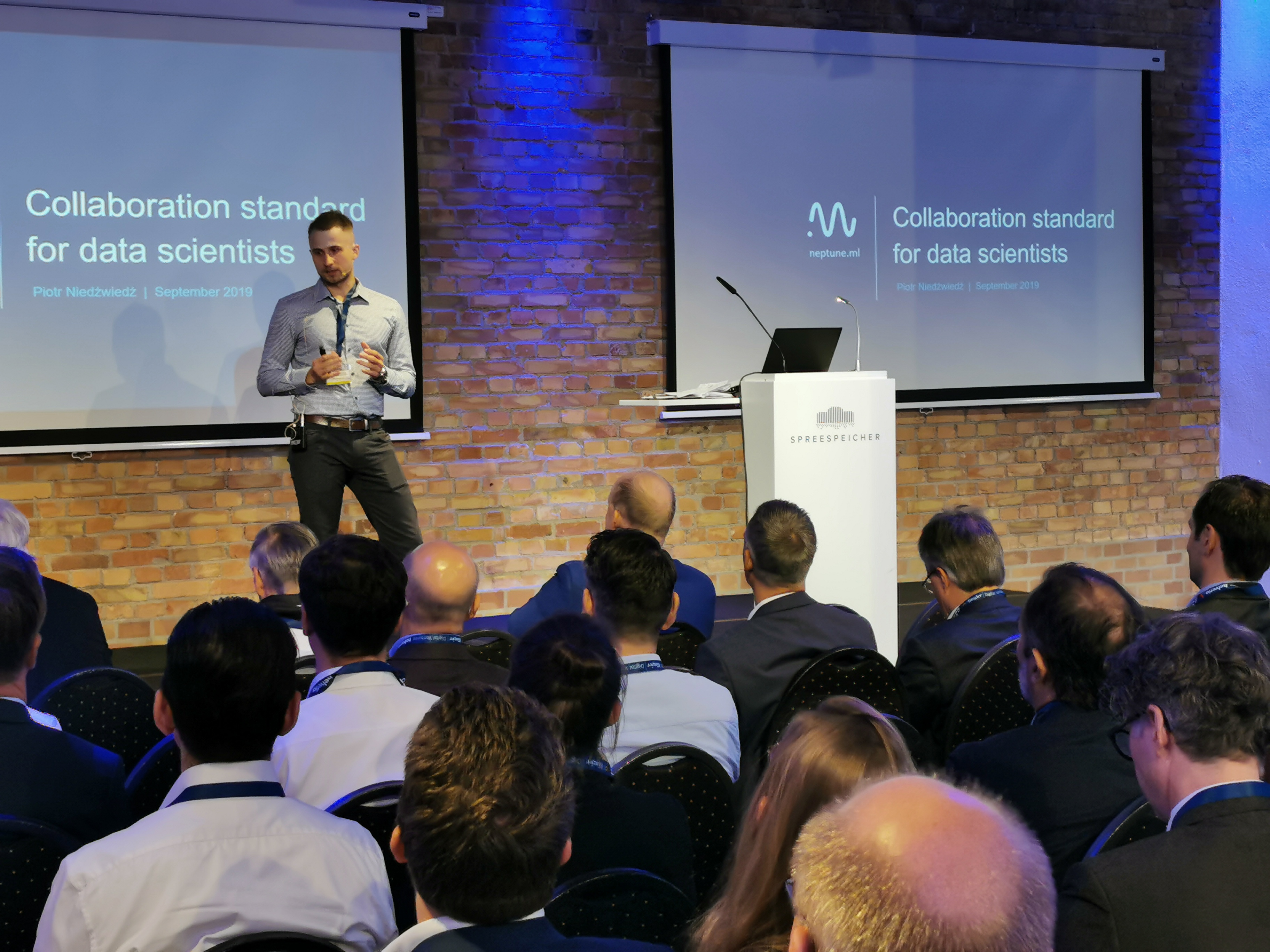
During a panel at the AI Builders Day at the Merantix AI Campus in Berlin a few days ago, we discussed funding AI founders from Day Zero (Link to Video). In that context, I found myself drawing on a term that is currently making waves in public market circles: HALO (Heavy Asset, Low Obsolescence). The HALO narrative suggests investing in sectors such as grids, pipelines, and transport infrastructure. The logic is defensive: these assets are so physically complex and slow to move that they are essentially "AI-proof".
But as an early-stage VC, I believe the real alpha does not lie in hiding behind assets. It lies in High Optimization (of such assets).
I have previously written about why I believe it is a great time to be investing in marketplaces. Here is why HAHO is where the real "Marketplaces x AI" opportunity lies.
Beyond the Assets: The Coordination Layer
As early-stage investors, we do not fund asset-heavy balance sheets or CapEx-driven models. We do not buy the trucks, the warehouses, or the turbines. We fund the coordination layer. The real opportunity exists in industries where assets are expensive, workflows are fragmented, and optimization materially changes margins. In these HAHO markets – think construction, maritime logistics, industrial procurement, robotics, or energy flexibility – AI does not just improve a workflow. It restructures the entire coordination of the market.
From HALO to HAHO: AI as the Restructuring Force
Public market investors like HALO because they see a shield against AI. I see a discontinuity. In HAHO sectors, the high density of physical assets combined with massive operational complexity has historically been a barrier to entry for marketplaces. As I noted in my previous piece on the Great Discontinuity, the unit economics of organizing these sectors simply did not work with human-led ops.
AI changes that. It turns the "Low Optimization" of these sectors into a "High Optimization" opportunity:
- LLMs structure the "unstructureable": Vetting suppliers and complex B2B compliance in real-time.
- Agents manage the physical rails: Orchestrating scheduling, routing, and fulfillment with a precision that was previously cost-prohibitive.
The HAHO Moat: Aggregation, Liability, and Pricing Power
If you are building in a HAHO market, your moat is not just the software. As Nicolas Bustamante recently highlighted, interface moats are eroding. Because building software has become so easy, the value of "thin" software is deflating. The companies that will capture real value are the ones taking on the "complex stuff" that traditional businesses want to outsource.
Your moat is not just the software; it is aggregation combined with physical market structure:
- The Liability Anchor: In high-asset environments, you cannot just be a search engine or a simple "matchmaker". You must be the Independent Third Party that assumes liability, handles disputes, and guarantees the result in the physical world.
- Outcome-Based Pricing: Because you are driving hard optimization and taking on liability, you gain real pricing power. In marketplace terms, outcome-based pricing simply means taking a cut of the transaction. You capture value because you create undeniable, measurable margin improvements.
- The Trust API: Autonomous agents need a trusted, structured endpoint to execute transactions in the real world. A HAHO marketplace becomes that essential infrastructure.
A Note of VC Realism
HAHO is not a branding trick; it is a difficult path. We know the risks: long sales cycles, complex integrations, deep institutional inertia, and often heavy regulation.
But frankly: We love regulated industries. Yes, they are incredibly hard to penetrate. But the opportunity only works if you can aggregate supply so deeply or embed into the transaction workflows so firmly that you become the Trust API for the agentic economy. Once you are locked in, integrated into those legacy workflows, and fortified by network effects, you are almost impossible to replace. Otherwise, you are just selling a commodity tool into a slow-moving industry.
The Bottom Line
At b2venture, we believe the biggest AI-native winners will not just live in the browser. They will live at the intersection of high-value physical assets and high-fidelity algorithmic coordination. Intelligence is the amplifier. Aggregation is the moat. Coordination is the prize.
We have already invested in a few companies in this space and are actively looking for more. If you are an obsessed founder building a HAHO marketplace, let us talk.
This is part 3 of my "Marketplaces x AI" series:
- The End of Marketplaces As We Know Them
- The Great Discontinuity
- The HAHO Framework
Our Investment Thesis for the Agentic Era: Looking Beyond the HALO Effect
During a panel at the AI Builders Day at the Merantix AI Campus in Berlin a few days ago, we discussed funding AI founders from Day Zero (Link to Video). In that context, I found myself drawing on a term that is currently making waves in public market circles: HALO (Heavy Asset, Low Obsolescence). The HALO narrative suggests investing in sectors such as grids, pipelines, and transport infrastructure. The logic is defensive: these assets are so physically complex and slow to move that they are essentially "AI-proof".
But as an early-stage VC, I believe the real alpha does not lie in hiding behind assets. It lies in High Optimization (of such assets).
I have previously written about why I believe it is a great time to be investing in marketplaces. Here is why HAHO is where the real "Marketplaces x AI" opportunity lies.
Beyond the Assets: The Coordination Layer
As early-stage investors, we do not fund asset-heavy balance sheets or CapEx-driven models. We do not buy the trucks, the warehouses, or the turbines. We fund the coordination layer. The real opportunity exists in industries where assets are expensive, workflows are fragmented, and optimization materially changes margins. In these HAHO markets – think construction, maritime logistics, industrial procurement, robotics, or energy flexibility – AI does not just improve a workflow. It restructures the entire coordination of the market.
From HALO to HAHO: AI as the Restructuring Force
Public market investors like HALO because they see a shield against AI. I see a discontinuity. In HAHO sectors, the high density of physical assets combined with massive operational complexity has historically been a barrier to entry for marketplaces. As I noted in my previous piece on the Great Discontinuity, the unit economics of organizing these sectors simply did not work with human-led ops.
AI changes that. It turns the "Low Optimization" of these sectors into a "High Optimization" opportunity:
- LLMs structure the "unstructureable": Vetting suppliers and complex B2B compliance in real-time.
- Agents manage the physical rails: Orchestrating scheduling, routing, and fulfillment with a precision that was previously cost-prohibitive.
The HAHO Moat: Aggregation, Liability, and Pricing Power
If you are building in a HAHO market, your moat is not just the software. As Nicolas Bustamante recently highlighted, interface moats are eroding. Because building software has become so easy, the value of "thin" software is deflating. The companies that will capture real value are the ones taking on the "complex stuff" that traditional businesses want to outsource.
Your moat is not just the software; it is aggregation combined with physical market structure:
- The Liability Anchor: In high-asset environments, you cannot just be a search engine or a simple "matchmaker". You must be the Independent Third Party that assumes liability, handles disputes, and guarantees the result in the physical world.
- Outcome-Based Pricing: Because you are driving hard optimization and taking on liability, you gain real pricing power. In marketplace terms, outcome-based pricing simply means taking a cut of the transaction. You capture value because you create undeniable, measurable margin improvements.
- The Trust API: Autonomous agents need a trusted, structured endpoint to execute transactions in the real world. A HAHO marketplace becomes that essential infrastructure.
A Note of VC Realism
HAHO is not a branding trick; it is a difficult path. We know the risks: long sales cycles, complex integrations, deep institutional inertia, and often heavy regulation.
But frankly: We love regulated industries. Yes, they are incredibly hard to penetrate. But the opportunity only works if you can aggregate supply so deeply or embed into the transaction workflows so firmly that you become the Trust API for the agentic economy. Once you are locked in, integrated into those legacy workflows, and fortified by network effects, you are almost impossible to replace. Otherwise, you are just selling a commodity tool into a slow-moving industry.
The Bottom Line
At b2venture, we believe the biggest AI-native winners will not just live in the browser. They will live at the intersection of high-value physical assets and high-fidelity algorithmic coordination. Intelligence is the amplifier. Aggregation is the moat. Coordination is the prize.
We have already invested in a few companies in this space and are actively looking for more. If you are an obsessed founder building a HAHO marketplace, let us talk.
This is part 3 of my "Marketplaces x AI" series:
- The End of Marketplaces As We Know Them
- The Great Discontinuity
- The HAHO Framework

The Author

Mathias Ockenfels
Partner
Mathias is a Partner in the b2venture fund team, focused on marketplaces, platforms, and network effects-driven businesses — but convinced it’s extraordinary founders, not models, that create outliers.
Team








.png)
.jpg)




.jpg)

.jpg)












.png)


.jpg)
-min.png)


.jpg)


.jpg)