

When Robots Become Replaceable: From Heterogeneous Fleets to Operational Knowledge Layers
When Robots Become Replaceable: From Heterogeneous Fleets to Operational Knowledge Layers
The ChatGPT moment for robotics
In his speech at the World Robot Conference this year, Unitree’s CEO Wang Xingxing remarked that robotics is poised to experience its ChatGPT moment within the next few years. The views inside the exhibition halls underlined his thesis: humanoid robots, industrial machines, service robots and other forms of embodied artificial intelligence – the number and variety of robotic platforms are rapidly growing.
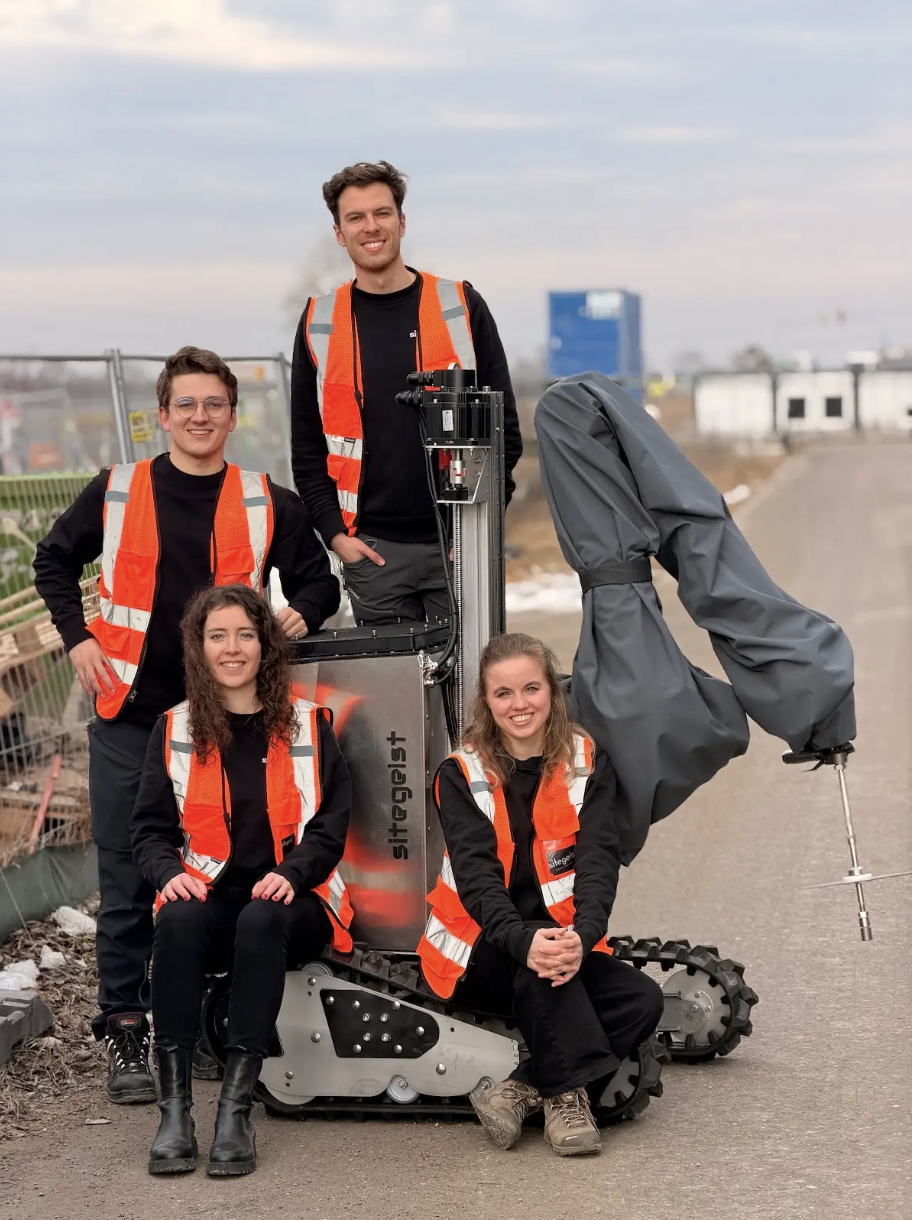
At b2venture, we observe the same trend across our portfolio: Robotics is moving from pilots into real operations across manufacturing, logistics, hospitals, retail, construction, infrastructure, and other physical environments. Companies like Sitegeist, Nautica Technologies, and Neura Robotics are deploying highly specialized robots as well as general-purpose systems into real-world situations.
At the same time, more capital inflows are accelerating this transition. As Sifted recently reported, European robotics startups raised more in six months than in the past two years combined. A large part of that was driven by our portfolio company Neura Robotics’ EUR 1.2bn Series C, which equips the company with more financial means to scale a broad robotics portfolio spanning industrial robots, autonomous mobile systems, and humanoids.
This development means that the supply side is rapidly expanding: more OEMs and robotic platforms are competing across an increasing number of use cases. While bearing many benefits for operators, heterogeneity is about to become the most immediate challenge.
A challenge of heterogeneity
Due to that vastly growing supplier side and the complexity of physical environments, the enterprises implementing robotics into their established workflows are highly unlikely to purchase robots from only one provider. Different OEMs will serve different tasks and coexist with conventional machines, infrastructure and humans. Each brings its own APIs, data and control software, turning what might initially look like an integration problem into a broader coordination challenge across an increasingly heterogeneous physical workforce.
The resulting problem is not the reliability of the individual machine; rather, the critical issue moves in the space between machines: coordinating tasks, dependencies and exceptions. Take the example of an airport implementing robotic systems for handling operational work. A workflow could involve cleaning robots from several vendors, elevators, access systems and human facility workers – the heterogeneity of the workforce, manual or automated, increases significantly. None of these individual entities owns the complete workflow, and each of them is dependent on the work of others.
Hardware: increasingly interchangeable
In addition to becoming more diverse, robotic systems become increasingly interchangeable as their capabilities improve. At the task level, growing competition between OEMs will make more robots capable of delivering comparable outcomes, making hardware increasingly commoditized. This does more than heighten the need for reliable cross-vendor integration: it fundamentally changes how operators think about their robotic workforce. When multiple machines can perform the same task, the relevant unit is no longer the individual robot, but the capability it provides. The abstraction shifts from machines to capabilities.
Ultimately, operators do not care which specific robot performs a task; they care about the outcome. A facility needs cleaning, transportation or inspection to happen at a certain quality, speed and cost. As more machines become capable of delivering comparable outcomes, the specific robot executing a task can change while the underlying operational need persists. The machine becomes increasingly interchangeable at the task level; the capability it provides becomes the more persistent abstraction. This shifts the focus towards the orchestration layer.
From fleet management solution to operational knowledge layer
With an overarching orchestration layer, operators can simply define objectives – for example, keep this terminal clean – without needing to cater to individual APIs, disparate data formats, and other vendor-specific logic. In the short-term, this will allow orchestration layers to provide smart solutions for the problem of managing a heterogeneous fleet with high replacement velocity. The opportunity, however, is much bigger than just integration.
The orchestration layer does not only translate abstract commands to concrete robot implementations; it is also a central place where knowledge is accumulated. By receiving data from the robots in operation, it learns which workflows succeed, where failures typically arise, and what the bottlenecks of the physical environment are. This way, the orchestration layer gathers insights that are currently fragmented across a multitude of individual machines and their OEM software. This makes operational knowledge much more persistent: when individual machines get replaced, new entities can inherit the accumulated context.
As a result, the orchestration layer becomes a repository of operational knowledge that learns and retains as it operates a physical environment over time – but that only translates into moat if the learning compounds. At the individual deployment level, accumulated knowledge about workflows, exceptions and machine performance can create persistence and switching costs as the system becomes increasingly embedded in operations. The larger opportunity emerges if parts of that knowledge are transferable: if what the system learns from one machine, task or environment improves how it operates the next. This is particularly likely where tasks, failure modes and workflow dependencies repeat across deployments. In those cases, every additional deployment can improve the system’s understanding of which capabilities work under which conditions, how exceptions should be handled, and how physical workflows can be optimized. If that does happen, a flywheel emerges: the hardware becomes easier to replace while the operational intelligence accumulated above it becomes harder to replace. That is how providers of orchestration layers can build real competitive moats.
The long-term opportunity is therefore larger than just smart fleet management. Orchestration layers can become a system of record for physical work: the place that owns the operational context while the execution layer underneath it can vary and evolve. We believe that companies working at this particular level have the potential to capture a significant share of the value created as physical AI moves into real-world operations.
The ChatGPT moment for robotics
In his speech at the World Robot Conference this year, Unitree’s CEO Wang Xingxing remarked that robotics is poised to experience its ChatGPT moment within the next few years. The views inside the exhibition halls underlined his thesis: humanoid robots, industrial machines, service robots and other forms of embodied artificial intelligence – the number and variety of robotic platforms are rapidly growing.
At b2venture, we observe the same trend across our portfolio: Robotics is moving from pilots into real operations across manufacturing, logistics, hospitals, retail, construction, infrastructure, and other physical environments. Companies like Sitegeist, Nautica Technologies, and Neura Robotics are deploying highly specialized robots as well as general-purpose systems into real-world situations.
At the same time, more capital inflows are accelerating this transition. As Sifted recently reported, European robotics startups raised more in six months than in the past two years combined. A large part of that was driven by our portfolio company Neura Robotics’ EUR 1.2bn Series C, which equips the company with more financial means to scale a broad robotics portfolio spanning industrial robots, autonomous mobile systems, and humanoids.
This development means that the supply side is rapidly expanding: more OEMs and robotic platforms are competing across an increasing number of use cases. While bearing many benefits for operators, heterogeneity is about to become the most immediate challenge.
A challenge of heterogeneity
Due to that vastly growing supplier side and the complexity of physical environments, the enterprises implementing robotics into their established workflows are highly unlikely to purchase robots from only one provider. Different OEMs will serve different tasks and coexist with conventional machines, infrastructure and humans. Each brings its own APIs, data and control software, turning what might initially look like an integration problem into a broader coordination challenge across an increasingly heterogeneous physical workforce.
The resulting problem is not the reliability of the individual machine; rather, the critical issue moves in the space between machines: coordinating tasks, dependencies and exceptions. Take the example of an airport implementing robotic systems for handling operational work. A workflow could involve cleaning robots from several vendors, elevators, access systems and human facility workers – the heterogeneity of the workforce, manual or automated, increases significantly. None of these individual entities owns the complete workflow, and each of them is dependent on the work of others.
Hardware: increasingly interchangeable
In addition to becoming more diverse, robotic systems become increasingly interchangeable as their capabilities improve. At the task level, growing competition between OEMs will make more robots capable of delivering comparable outcomes, making hardware increasingly commoditized. This does more than heighten the need for reliable cross-vendor integration: it fundamentally changes how operators think about their robotic workforce. When multiple machines can perform the same task, the relevant unit is no longer the individual robot, but the capability it provides. The abstraction shifts from machines to capabilities.
Ultimately, operators do not care which specific robot performs a task; they care about the outcome. A facility needs cleaning, transportation or inspection to happen at a certain quality, speed and cost. As more machines become capable of delivering comparable outcomes, the specific robot executing a task can change while the underlying operational need persists. The machine becomes increasingly interchangeable at the task level; the capability it provides becomes the more persistent abstraction. This shifts the focus towards the orchestration layer.
From fleet management solution to operational knowledge layer
With an overarching orchestration layer, operators can simply define objectives – for example, keep this terminal clean – without needing to cater to individual APIs, disparate data formats, and other vendor-specific logic. In the short-term, this will allow orchestration layers to provide smart solutions for the problem of managing a heterogeneous fleet with high replacement velocity. The opportunity, however, is much bigger than just integration.
The orchestration layer does not only translate abstract commands to concrete robot implementations; it is also a central place where knowledge is accumulated. By receiving data from the robots in operation, it learns which workflows succeed, where failures typically arise, and what the bottlenecks of the physical environment are. This way, the orchestration layer gathers insights that are currently fragmented across a multitude of individual machines and their OEM software. This makes operational knowledge much more persistent: when individual machines get replaced, new entities can inherit the accumulated context.
As a result, the orchestration layer becomes a repository of operational knowledge that learns and retains as it operates a physical environment over time – but that only translates into moat if the learning compounds. At the individual deployment level, accumulated knowledge about workflows, exceptions and machine performance can create persistence and switching costs as the system becomes increasingly embedded in operations. The larger opportunity emerges if parts of that knowledge are transferable: if what the system learns from one machine, task or environment improves how it operates the next. This is particularly likely where tasks, failure modes and workflow dependencies repeat across deployments. In those cases, every additional deployment can improve the system’s understanding of which capabilities work under which conditions, how exceptions should be handled, and how physical workflows can be optimized. If that does happen, a flywheel emerges: the hardware becomes easier to replace while the operational intelligence accumulated above it becomes harder to replace. That is how providers of orchestration layers can build real competitive moats.
The long-term opportunity is therefore larger than just smart fleet management. Orchestration layers can become a system of record for physical work: the place that owns the operational context while the execution layer underneath it can vary and evolve. We believe that companies working at this particular level have the potential to capture a significant share of the value created as physical AI moves into real-world operations.

The Author

Anna Bosch
Principal
Anna is Principal in the b2venture fund team, focusing on software solutions across a range of verticals, including EdTech, FinTech, and sustainability, as well as being our in-house expert for all things ESG.
Team



.png)
.jpg)



.jpg)
.jpg)
.jpg)











.png)


.jpg)
-min.png)


.jpg)


.jpg)